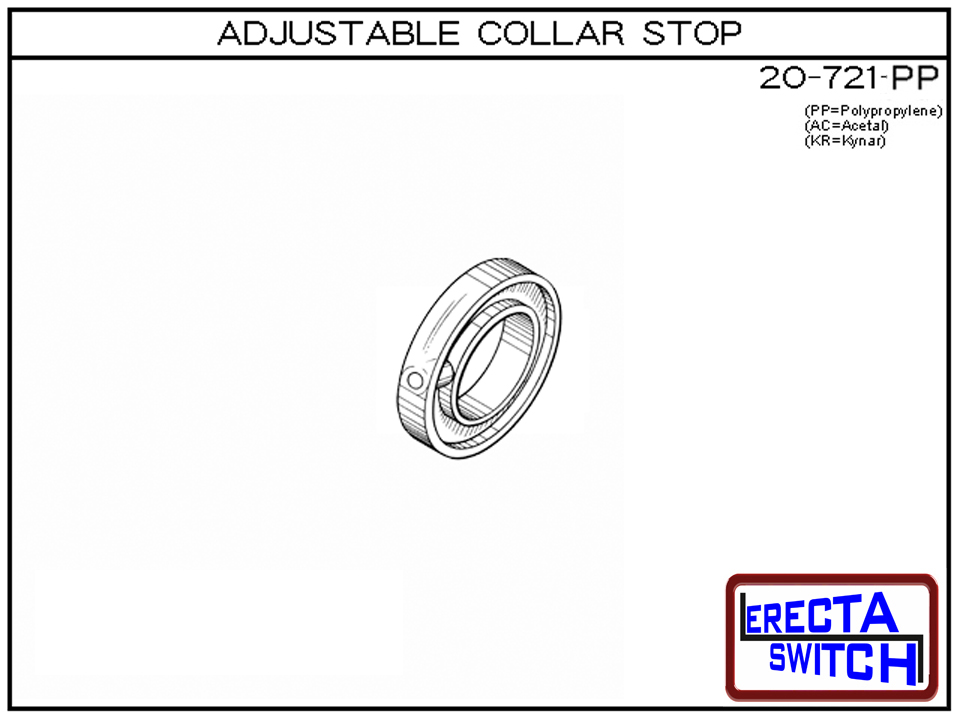
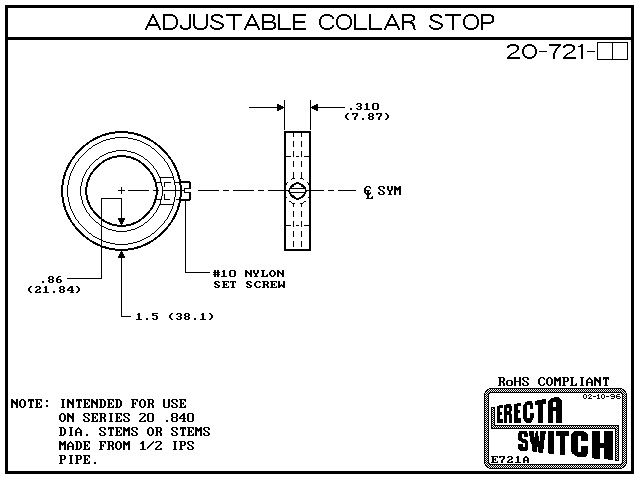
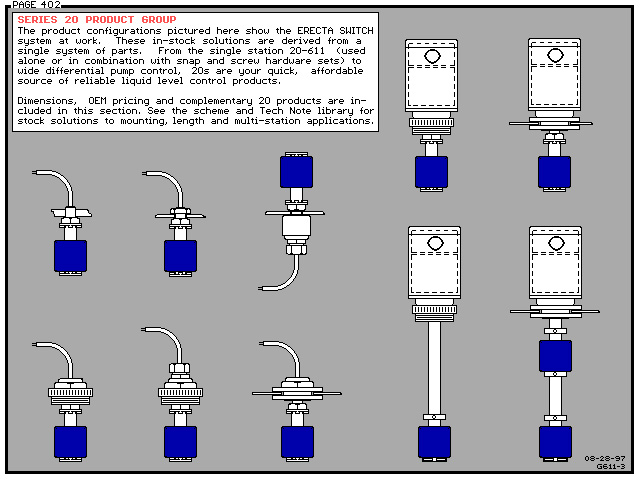
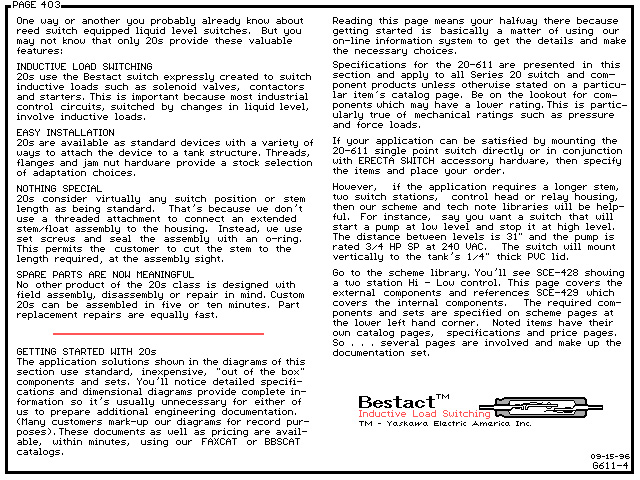
Series 20 collar stop for float travel limiting on extended-stem assemblies. Available in Polypropylene, Acetal, and Kynar PVDF.
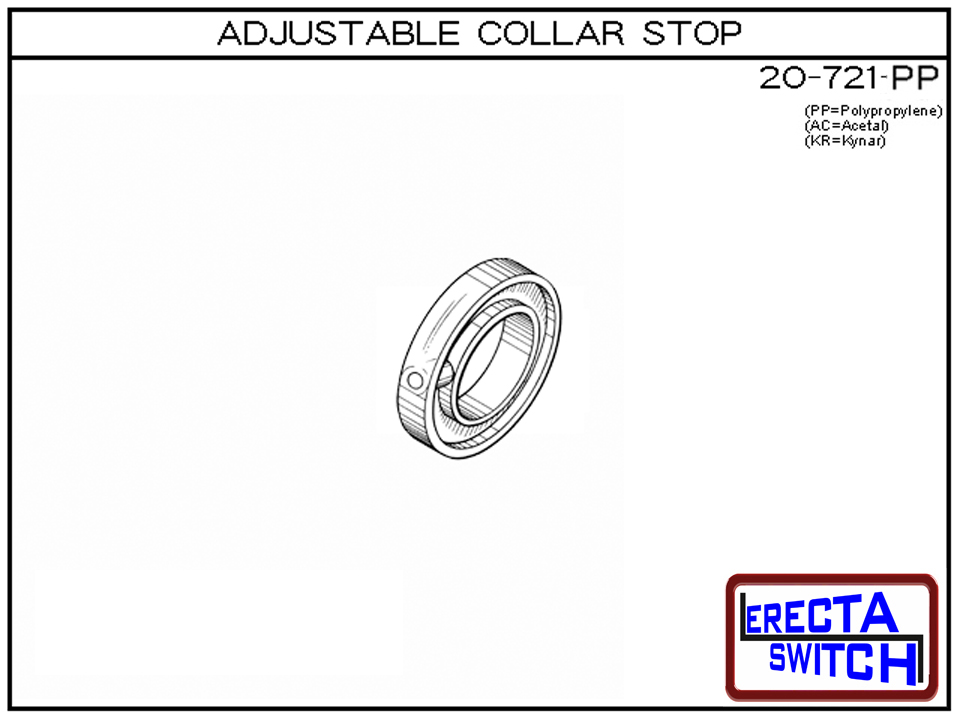
The 20-721 is available in three wetted materials. Polypropylene for water-based and mild chemical service. Acetal for solvents, fuels, and hydrocarbons. Kynar PVDF for aggressive acids, halogens, and ultra-high-purity applications.
Common specifications across all 20-721 material variants.
| Specification | Value |
|---|---|
| Type | Collar stop |
| Compatibility | Series 20 extended-stem assemblies |
| Compliance | RoHS |
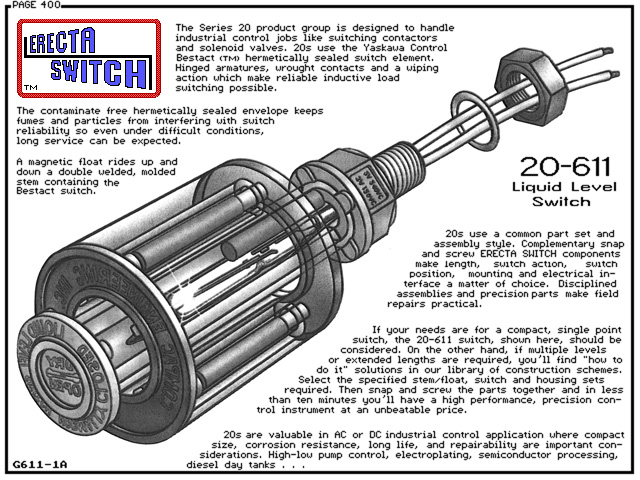
A float level switch like the 20-721 is a point-level device: a float rides the liquid and actuates a magnetic reed switch at a set height, giving a simple on/off signal — no power, no firmware, no calibration. "Sensors" usually means continuous measurement (ultrasonic, radar, capacitive). ERECTA SWITCH targets reliable discrete-point control.
The 20-721 is used for pump start/stop control, high-level overflow protection, low-level dry-run protection, and tank or reservoir level alarms in OEM equipment. The modular ERECTA SWITCH system is built into laundry, HVAC, water-treatment, hydraulic, and chemical-handling machinery.
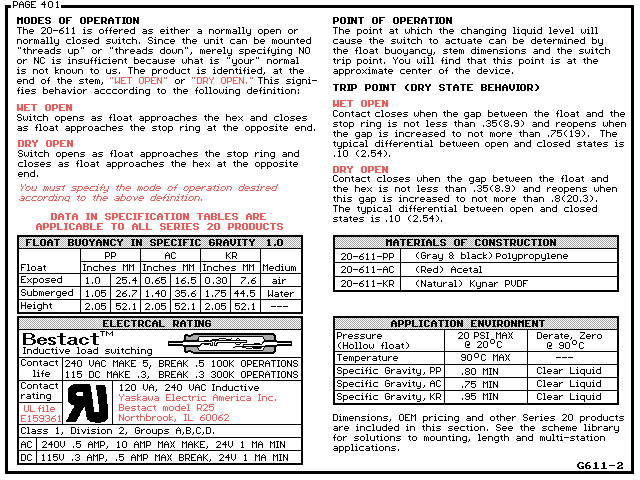
Choose the material to match the media: Polypropylene (PP) for general aqueous, acids, and bases; Acetal (AC/Delrin) for solvents, fuels, and hydrocarbons; Kynar PVDF (KR) for aggressive or harsh chemicals. Every ERECTA SWITCH model is offered in all three materials.
The 20-721 is point-level — it provides a discrete on/off signal at a set height. For multiple switch points, use a multi-level extended-stem set (2-, 3-, or 4-level) instead of a single continuous sensor.
ERECTA SWITCH offers vertical top-mount, bulkhead, and extended-stem configurations, plus side-mounted single-point models. The mount style is part of the model number — select the configuration that matches your tank geometry.
Point detection is repeatable and mechanical. The trip height on the 20-721 is set by the 10-715 Precision Nipple, ordered separately in 1-inch increments (1″–70″), so you place the switch point exactly where the application needs it.
Our engineering team can verify chemical compatibility with your application before you order.