ERECTA SWITCH® by Compac Engineering

Series 20 — Extended Stem Hardware

Series 20 Extended Stem Hardware provides the mechanical and electrical infrastructure for mounting liquid level switches at extended stem lengths. The system includes control heads with factory-sealed relay compartments, relay housing bodies, stem sets, and associated hardware. Control heads accept 20-726 stem sets fastened with set screws; all stem/head interfaces are O-ring sealed for rain-tight service. Available in 120V and 240V configurations.

20-725 — Control Heads

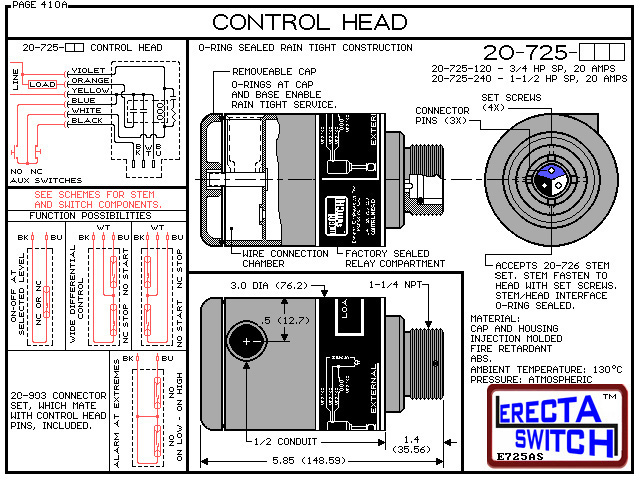
The 20-725 control head houses a factory-sealed relay compartment with a 20A SPDT relay. O-ring sealed rain-tight construction with removable cap. Accepts 20-726 stem sets. Includes 20-903 connector set. Injection-molded fire-retardant ABS housing rated to 130°C.
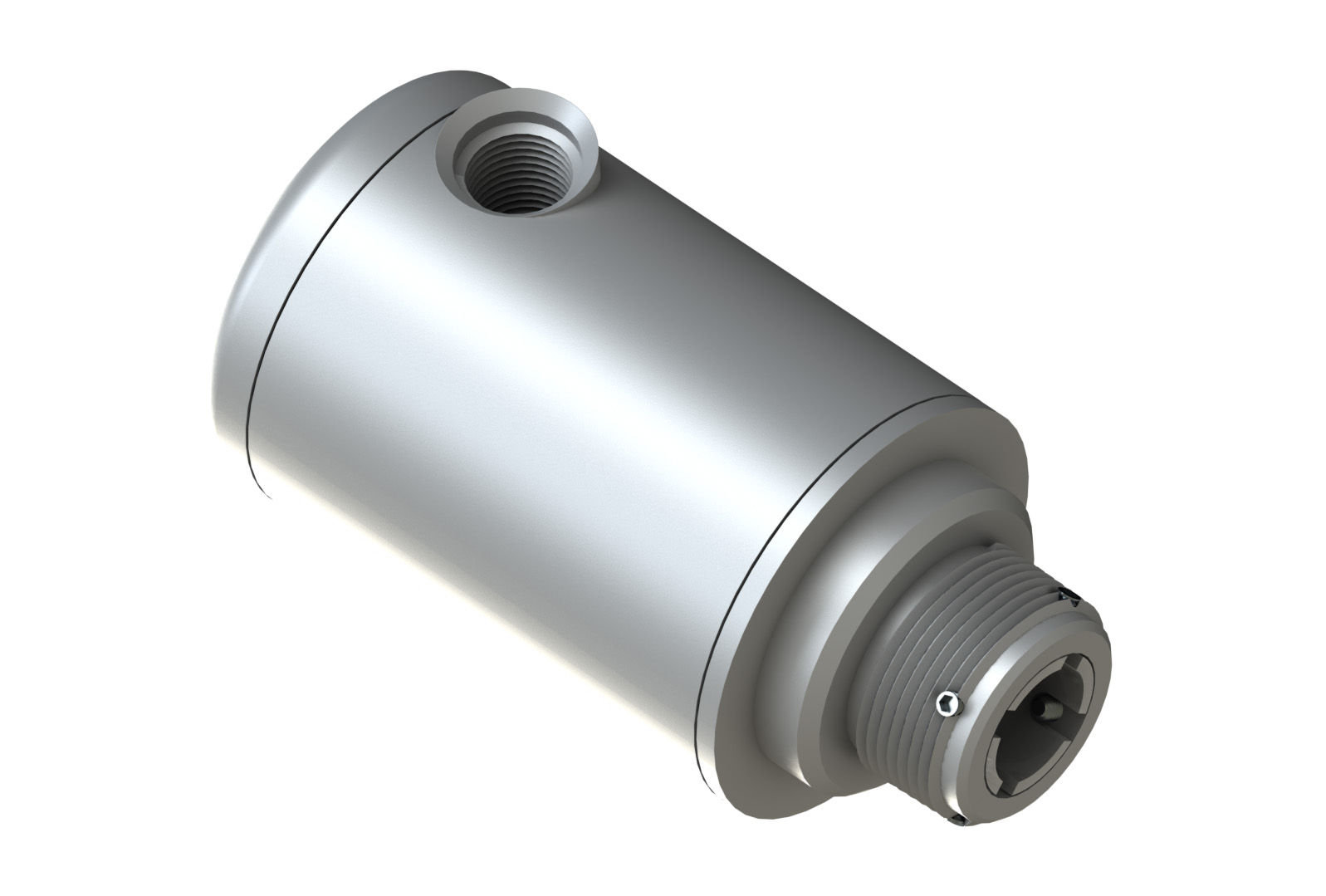
20-725-120 Control Head 120V

20-725-120

Control Head · 120V · 3/4 HP · 20A SPDT

As low as $95.47

View Product
20-725-240 Control Head 240V

20-725-240

Control Head · 240V · 1-1/2 HP · 20A SPDT

As low as $95.47

View Product
20-725 Control Head — Catalog Drawing Page 410A
Page 410A — 20-725 Control Head · O-Ring Sealed Rain Tight Construction

20-725-HS — Relay Housing, O-Ring Seal + Set Screws

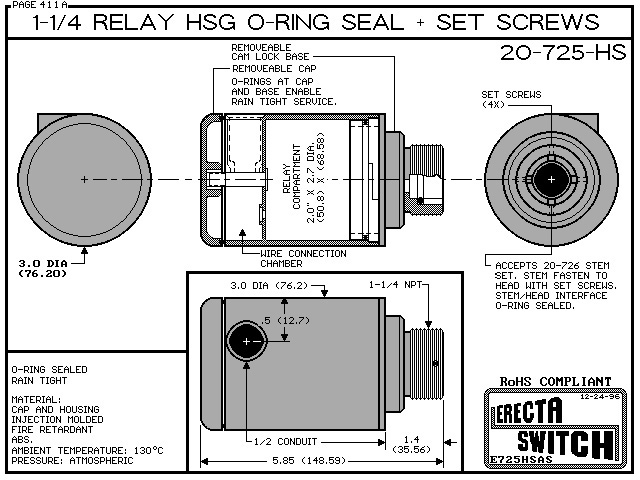
The 20-725-HS is the housing body for use when building or replacing the enclosure in a Series 20 extended stem installation. Features removable cap with O-ring seals at cap and base for rain-tight service. Accepts 20-726 stem sets fastened with four set screws; stem/head interface is O-ring sealed.
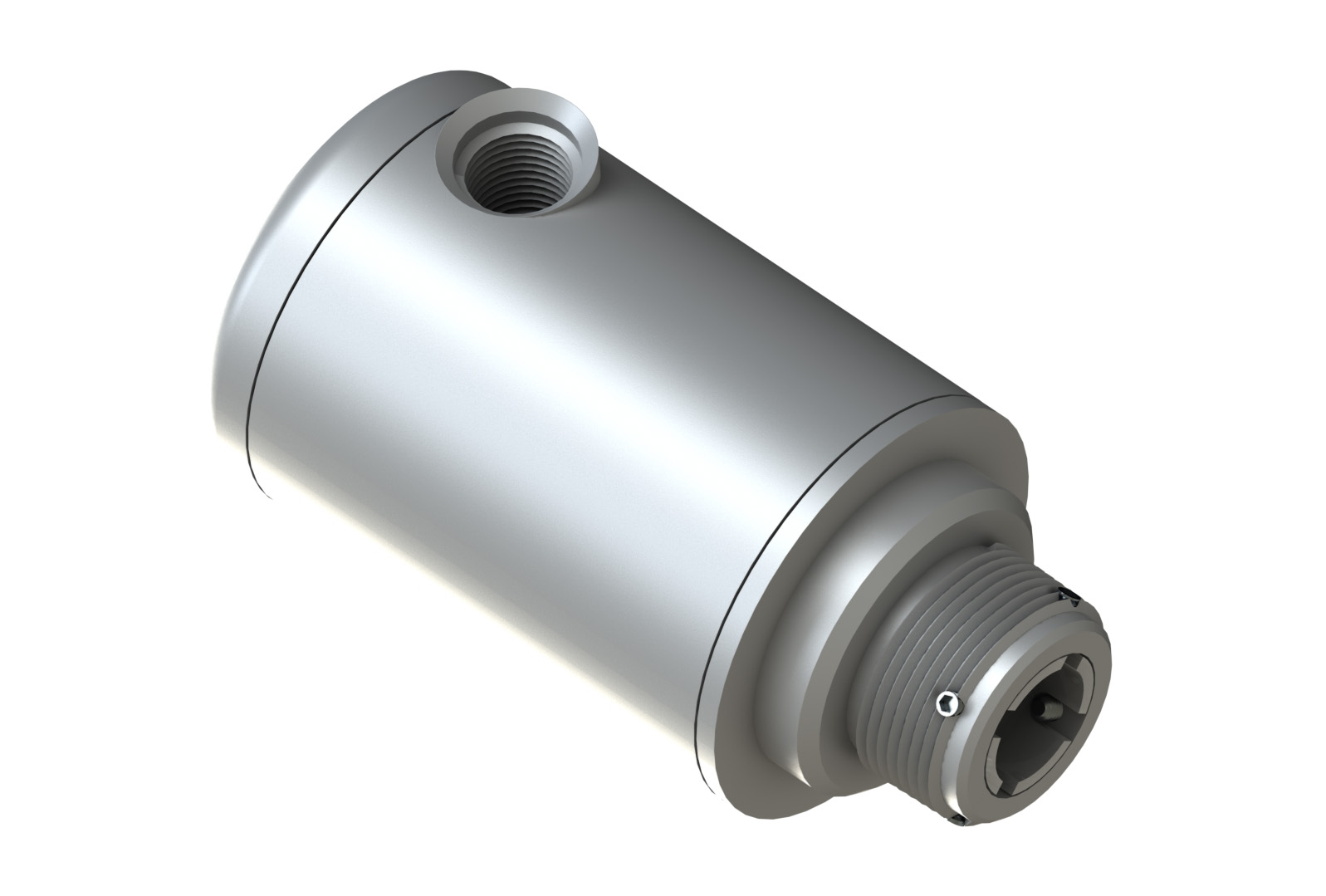
20-725-HS Relay Housing

20-725-HS

1-1/4 Relay Housing · O-Ring Seal · Set Screws

As low as $27.69

View Product
20-725-HS 1-1/4 Relay Hsg O-Ring Seal + Set Screws — Catalog Drawing Page 411A
Page 411A — 20-725-HS 1-1/4 Relay Hsg O-Ring Seal + Set Screws · RoHS Compliant

System Overview

The Series 20 extended stem system is designed for applications requiring the liquid level sensing element to be positioned at a distance from the control head. Key system features:

← Back to Series 20
Frequently Asked Questions

Common Questions About This Product

What is the difference between a float level switch and a liquid level sensor?

A float level switch like the Series 20 level switch is a point-level device: a float rides the liquid and actuates a magnetic reed switch at a set height, giving a simple on/off signal — no power, no firmware, no calibration. "Sensors" usually means continuous measurement (ultrasonic, radar, capacitive). ERECTA SWITCH targets reliable discrete-point control.

What are the typical applications for the Series 20 level switch?

The Series 20 level switch is used for pump start/stop control, high-level overflow protection, low-level dry-run protection, and tank or reservoir level alarms in OEM equipment. The modular ERECTA SWITCH system is built into laundry, HVAC, water-treatment, hydraulic, and chemical-handling machinery.

What liquid chemistries is the Series 20 level switch compatible with?

Choose the material to match the media: Polypropylene (PP) for general aqueous, acids, and bases; Acetal (AC/Delrin) for solvents, fuels, and hydrocarbons; Kynar PVDF (KR) for aggressive or harsh chemicals. Every ERECTA SWITCH model is offered in all three materials.

Is the Series 20 level switch a point-level or continuous-level device?

The Series 20 level switch is point-level — it provides a discrete on/off signal at a set height. For multiple switch points, use a multi-level extended-stem set (2-, 3-, or 4-level) instead of a single continuous sensor.

What mounting options are available for the Series 20 level switch?

ERECTA SWITCH offers vertical top-mount, bulkhead, and extended-stem configurations, plus side-mounted single-point models. The mount style is part of the model number — select the configuration that matches your tank geometry.

How is the actuation level set on the Series 20 level switch, and how accurate is it?

Point detection is repeatable and mechanical. The trip height on the Series 20 level switch is set by the 10-715 Precision Nipple, ordered separately in 1-inch increments (1″–70″), so you place the switch point exactly where the application needs it.