Series 11 · ERECTA SWITCH®
11-893-R — 1-1/4″ NPT Temperature Switch Set with Receptacle
1-1/4" NPT with wire receptacle housing Available in Polypropylene, Acetal, and Kynar PVDF. 1-Pack and 10-Pack.
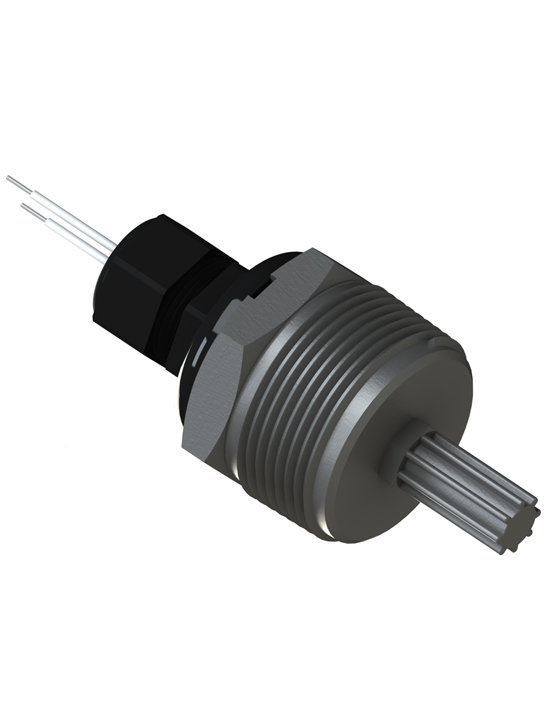
1-1/4" NPT with wire receptacle housing Available in Polypropylene, Acetal, and Kynar PVDF. 1-Pack and 10-Pack.
The 11-893-R is available in three wetted materials and two pack sizes. Polypropylene for water-based and mild chemical service. Acetal for solvents, fuels, and hydrocarbons. Kynar PVDF for aggressive acids, halogens, and ultra-high-purity applications.
Common specifications across all 11-893-R material variants.
| Specification | Value |
|---|---|
| Mounting | 1-1/4″ NPT · 0.20″ dia min wire entry |
| Dimensions | 2.60″ (66.04mm) total · 1.80″ (45.72mm) body · 1.00″ (25.40mm) probe |
| Components | 11-800 · 10-700-R1 Receptacle · 10-700-WC-NY |
With a bimetallic creep-action element — not an electronic sensor. Two bonded metals bend as they heat and carry the contact through the setpoint. The 11-893-R is SPST with 16 preset setpoints across 0–100°C, rated 6A at 120V AC resistive and 2A maximum at 240VDC resistive. Nothing is powered and nothing is calibrated in the field.
Start with the setpoint and the medium, then the mounting depth. The 11-893-R uses a bimetallic creep-action element — SPST, 6A 120V AC resistive — sealed with an O-ring and rated to 50 PSI at 20°C. Sensing depth is set by the 10-715 precision nipple, so one switch reaches anywhere from 1 to 70 inches into the vessel.
Check the contact column before you wire it. A switch that opens on rising temperature is normally closed, so the circuit breaks at the setpoint — which is what a heater interlock wants and the opposite of what an over-temperature alarm wants. Sixteen preset setpoints cover 0–100°C, so the action matters as much as the number.
Sensing depth is set by the 10-715 precision nipple, which places the tip anywhere from 1 to 70 inches in. Mounting is bulkhead, NPT, snap bracket or angle connector, so one switch adapts to a vessel wall, a pipe boss or a panel, and the seal is an O-ring. Put the element in moving liquid — not in a dead pocket and not against a wall.
No. The setpoint is preset at the factory — one of 16 across 0–100°C — and there is nothing to adjust. The element is bimetallic and unpowered. Maintenance is keeping the probe clean and reseating the O-ring on reinstallation. To test, bring the medium through the setpoint and watch the contact change state; if it never changes, replace the switch.
Choose the material to match the media: Polypropylene (PP) for general aqueous, acids, and bases; Acetal (AC/Delrin) for solvents, fuels, and hydrocarbons; Kynar PVDF (KR) for aggressive or harsh chemicals. Most ERECTA SWITCH models are offered in all three materials; some are material-specific, so check the product page for the model you need.
Our engineering team can verify chemical compatibility and recommend the right mounting option for your application.